


Plastic Security Seals: Applications, Types, Benefits and Customization Guide
Plastic Security Seals: Applications, Types, Benefits and Customization Guide
Plastic security seals are widely used to protect containers, bags, meters, boxes, doors, and other equipment from unauthorized access or tampering. Designed for easy application and quick visual inspection, plastic security seals provide a simple and cost-effective way to improve security and traceability.
For logistics companies, utility providers, warehouses, retailers, transportation companies, and industrial businesses, choosing the right plastic security seal can help reduce unauthorized access and make tampering easier to identify.
In this guide, we will introduce the main types of plastic security seals, their applications, benefits, customization options, and key factors to consider when choosing a plastic seal supplier.
What Is a Plastic Security Seal?
A plastic security seal is a single-use security device made primarily from plastic materials. It is normally designed to be difficult to remove without visible damage.
Many plastic security seals include a unique serial number, barcode, QR code, logo, or other identification marks. These markings allow users to record and track sealed items throughout transportation, storage, or daily operations.
Unlike reusable locks, most plastic security seals are designed for one-time use. Once the seal is removed or broken, the user can visually determine that the sealed item may have been accessed.
How Do Plastic Security Seals Work?
Plastic security seals are generally simple to install and inspect.
The basic process is:
-
Insert the locking part through the designated hole or opening.
-
Pull or press the seal until it is securely locked.
-
Record the seal number or identification code if required.
-
Check the seal before opening the equipment or container.
-
Remove or break the seal when authorized access is required.
A broken, cut, or damaged seal can indicate that the sealed item may have been opened or accessed.
This simple design makes plastic tamper evident seals suitable for applications where fast installation and visual inspection are important.
Common Types of Plastic Security Seals
Different applications require different seal designs. Common plastic security seal types include the following.
1. Pull-Tight Plastic Security Seals
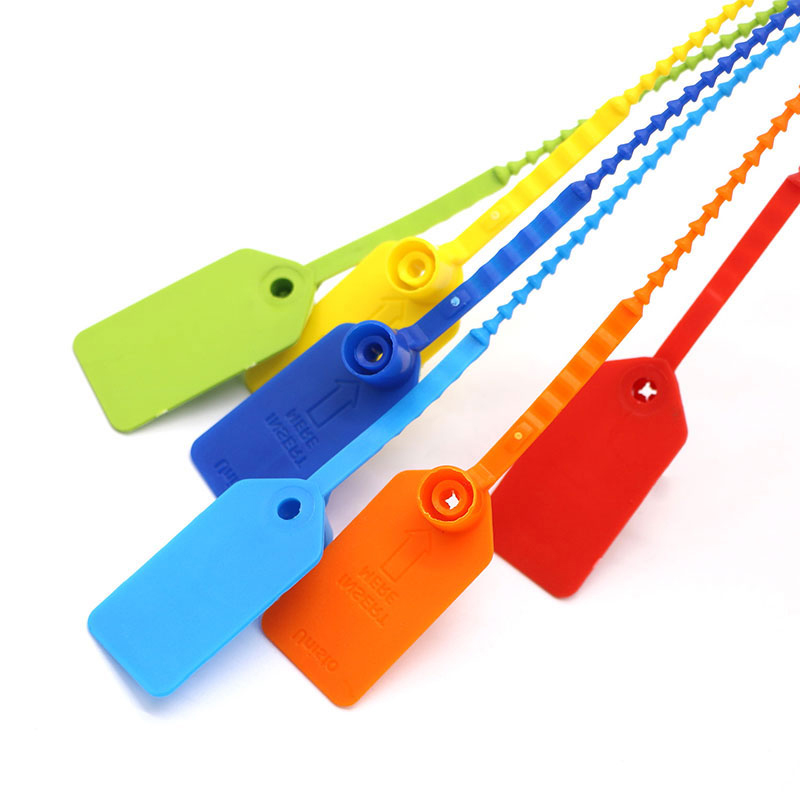
Pull-tight seals are one of the most commonly used types of plastic security seals. They feature a flexible plastic strap that can be pulled tightly around a handle, door, bag, box, or other opening.
They are commonly used for:
-
Bags and sacks
-
Containers
-
Warehouse boxes
-
Transportation equipment
-
Retail applications
-
Utility equipment
Their simple structure makes them suitable for high-volume applications.
2. Fixed-Length Plastic Security Seals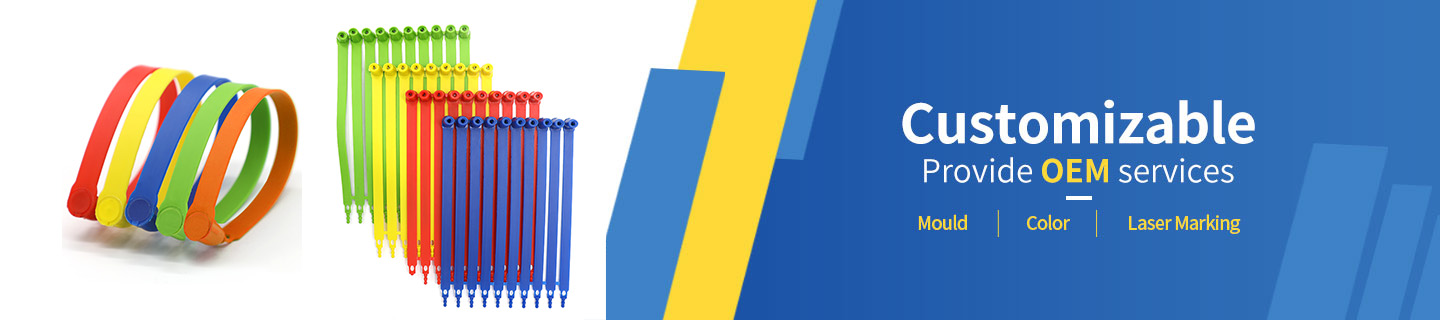
Fixed-length plastic seals have a predetermined sealing length and are often used where consistent installation is required.
They can be used on:
-
Meters
-
Electrical cabinets
-
Valves
-
Control panels
-
Utility equipment
-
Industrial devices
3. Plastic Padlock Seals
 Plastic padlock-style security seals are designed to provide a lock-like appearance while maintaining a lightweight plastic structure.
They are often used for:
-
Fire extinguishers
-
Electrical cabinets
-
Emergency equipment
-
Valves
-
Doors and access panels
4. Meter Seals
 Plastic meter seals are commonly used by electricity, gas, and water utility companies to help protect meters against unauthorized access.
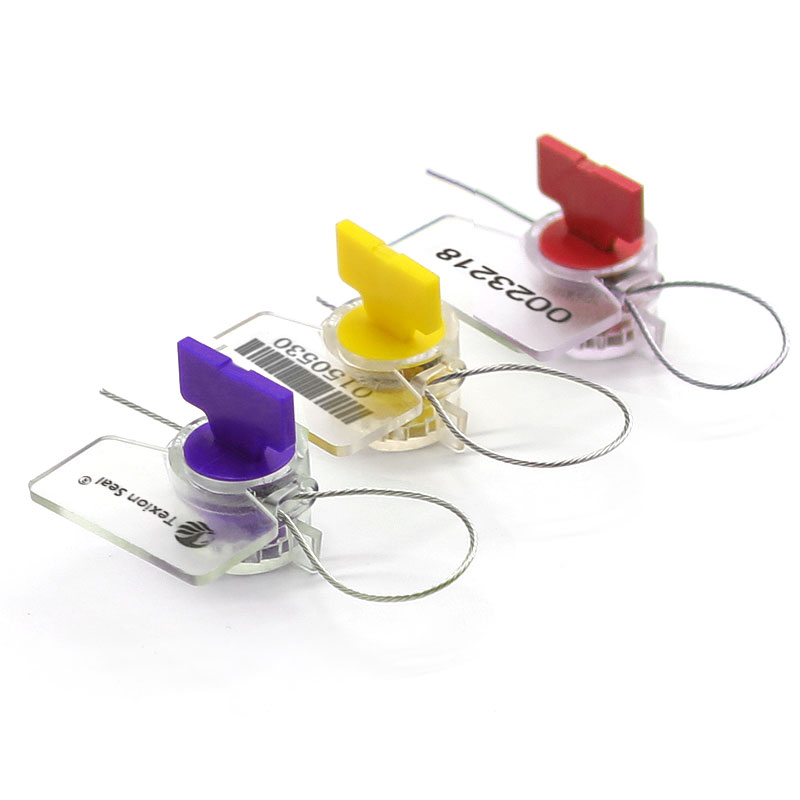
Depending on the design, meter seals can be customized with numbers, letters, logos, or other identification information.
Where Are Plastic Security Seals Used?
Plastic security seals have applications across many industries.
Logistics and Transportation
Plastic seals can be used on trucks, containers, bags, cartons, and other transportation equipment.
By recording the seal number before shipment, companies can create an additional layer of traceability throughout the transportation process.
Electricity and Utility Services
Utility companies often use plastic meter seals on electricity meters, gas meters, water meters, and electrical cabinets.
The seal provides a quick visual indication of whether the sealed area has been accessed.
Warehousing
Warehouses can use plastic security seals on storage boxes, cages, bags, and other controlled-access areas.
Numbered seals can also help workers track inventory and identify individual sealed units.
Retail and Cash Handling
Security seals can be used on cash bags, transport bags, storage containers, and other equipment requiring controlled access.
Industrial Applications
Manufacturing and industrial companies may use plastic seals on valves, control cabinets, equipment panels, and other access points.
Key Benefits of Plastic Security Seals
Easy to Install
Most plastic security seals can be installed quickly without special tools. This is especially useful for businesses that need to seal hundreds or thousands of items every day.
Tamper Evident Design
Many plastic security seals are designed so that removal leaves visible evidence, such as a broken strap or damaged locking structure.
Identification and Traceability
Serial numbers, barcodes, QR codes, logos, and other markings can help companies identify and track sealed products or equipment.
Lightweight and Cost Effective
Plastic security seals are generally lightweight and economical, making them suitable for large-volume applications.
Customizable
Manufacturers can customize plastic seals according to the customer's requirements, including color, size, sealing length, numbering, logo, barcode, and other identification information.
Custom Plastic Security Seals
For businesses with specific security or identification requirements, customized plastic security seals can provide a more suitable solution than standard products.
Common customization options include:
Color:
Red, blue, yellow, green, white, orange, and other colors can be available according to the product design and customer requirements.
Numbering:
Sequential numbers or customized identification codes can be added to improve traceability.
Logo:
Company logos can be printed, stamped, or marked depending on the seal material and design.
Barcode and QR Code:
Barcode or QR code marking can be used for inventory management and identification when supported by the product structure.
Text and Letters:
Company names, short text, letters, and other identification information can be customized.
Length:
For pull-tight seals and cable-style designs, the sealing length can often be customized according to the application.
How to Choose the Right Plastic Security Seal?
Before purchasing plastic security seals, buyers should consider several factors.
1. Application
First, determine where the seal will be used. A seal for an electricity meter may have different requirements from a seal used on a transportation bag or warehouse container.
2. Sealing Method
Consider whether you need a pull-tight seal, fixed-length seal, padlock-style seal, meter seal, or another design.
3. Material
The plastic material should be selected according to the operating environment, required strength, temperature conditions, and application.
4. Identification Requirements
If traceability is important, consider whether you need sequential numbers, barcodes, QR codes, logos, or customized text.
5. Color
Different colors can be used to identify departments, locations, products, or different security levels.
6. Quantity
For large-volume projects, purchasing directly from a plastic security seal manufacturer can provide more customization options and better production efficiency.
Plastic Security Seal Manufacturer and Supplier
Choosing a reliable plastic security seal manufacturer is important for long-term B2B purchasing.
A professional manufacturer should be able to provide:
-
Stable production capacity
-
Consistent product quality
-
Multiple plastic seal designs
-
OEM and ODM customization
-
Custom colors
-
Sequential numbering
-
Logo and barcode marking
-
Sample support
-
Quality inspection
-
Flexible packaging options
-
Reliable delivery
For large-volume orders, buyers should also confirm the production lead time, packaging requirements, marking method, minimum order quantity, and customization process before placing an order.
Why Choose Customized Plastic Security Seals?
Standard security seals can meet many basic requirements, but customized seals can be designed around a company's specific application.
For example, a logistics company may require sequential numbers and a specific color, while a utility company may need a customized logo and permanent identification marking.
Customized plastic security seals can therefore combine security, identification, traceability, and brand recognition in one product.
Conclusion
Plastic security seals are a practical solution for applications that require controlled access, tamper evidence, and product identification.
From logistics and transportation to electricity meters, warehouses, retail, and industrial equipment, different types of plastic security seals can be customized to meet different application requirements.
When selecting a plastic security seal, consider the application, seal structure, material, identification method, color, sealing length, and order quantity.
Working directly with an experienced plastic security seal manufacturer can also make it easier to develop customized products according to samples, drawings, or specific application requirements.
If you are looking for plastic security seals, plastic tamper evident seals, or customized plastic safety seals, contact us to discuss your requirements and get a suitable solution for your application.
 Security seal prevents leakage of hazardous materials
 The importance of high security seal in the medical industry
 The difference between laser marking and hot stamping
